About the corral
Model Corral: Bringing Order to the New Wild West
When Daren Klum created Model Corral, the name almost seemed destined.
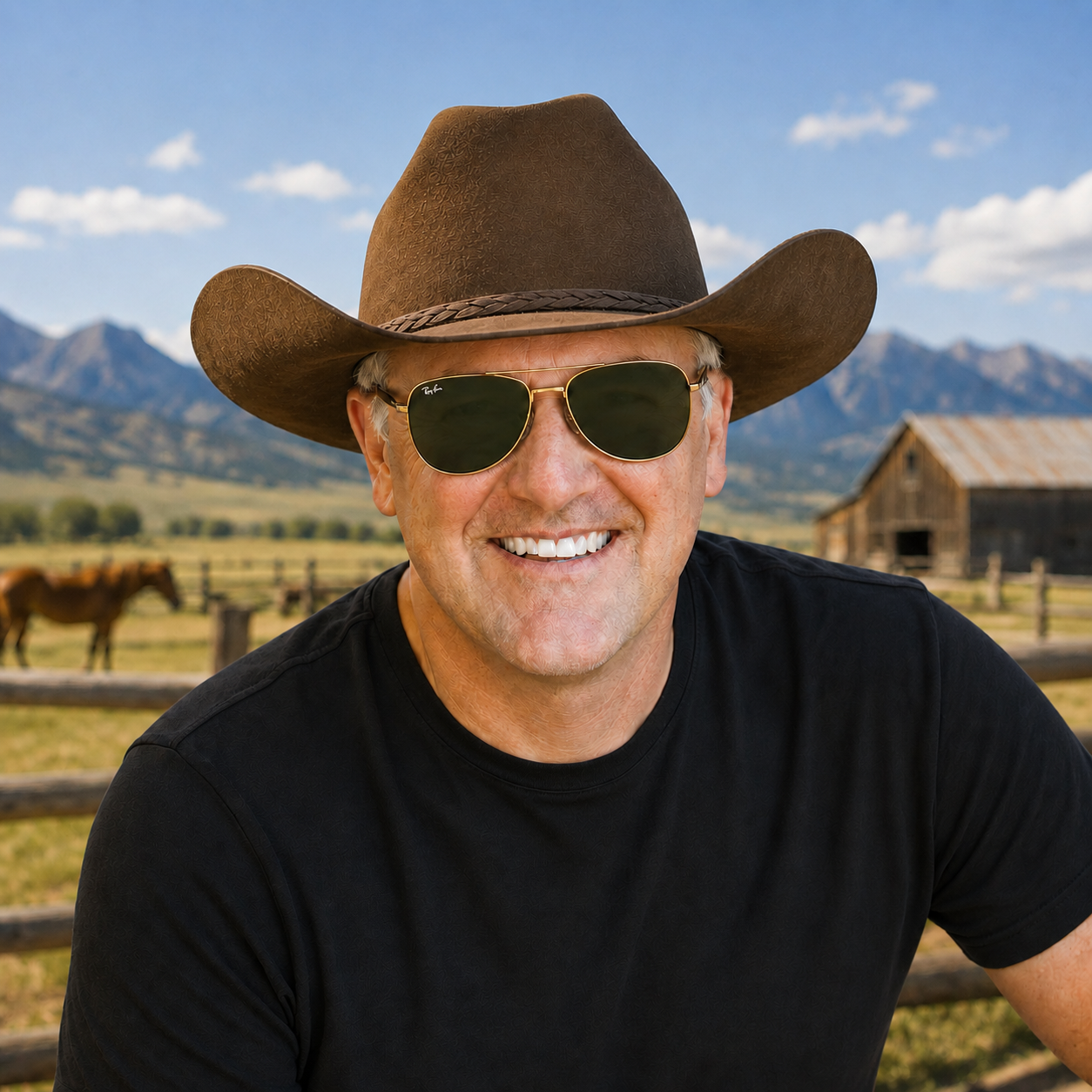
Founder & CEO
Daren Klum
Daren built Model Corral to keep AI open-source, sovereign, and accessible to everyone. A lifelong believer in personal technology and the ethical open-source frontier, he is committed to a platform that serves its community before any bottom line.
Long before artificial intelligence, cloud computing, or large language models existed, Daren's grandfather, Glenn Cooley, was a rancher in San Bernardino, California, where he operated the Cooley Ranch. His world was cattle, open land, hard work, and the very practical challenge of keeping track of something valuable that had a tendency to wander.
Decades later, the landscape looks completely different, but strangely familiar.
The Internet has become its own version of the Wild West. Data moves everywhere. AI companies are racing to build bigger and more powerful models. Thousands of open-source and proprietary models are appearing across the digital landscape, each trained differently, owned differently, and capable of doing different jobs.
And somewhere along the way, the ranching analogy became almost too perfect to ignore.
Data is the new cattle.
AI models are the new herd.
And somebody needs to manage the corral.
The comparison is intentionally a little cheeky, but underneath the humor is a serious technology problem.
A rancher doesn't treat every animal the same. Different cattle have different characteristics, purposes, histories, and value. A rancher needs to know where they came from, where they belong, how they're performing, and which ones are right for a particular purpose.
AI models aren't much different.
One model may excel at reasoning. Another might be better at coding. Another could specialize in medicine, finance, cybersecurity, computer vision, or creative work. Some models should operate locally. Others might run in a private data center. Some may be appropriate for highly sensitive information, while others absolutely are not.
The future of AI probably won't belong to one giant model that does everything.
It will look more like a herd.
Companies and individuals will have dozens — or eventually hundreds — of specialized models available to them. The challenge will be knowing which model to use, where it came from, what data it can access, how trustworthy it is, and whether it should be allowed anywhere near sensitive information.
That's where the idea behind Model Corral was born.
Model Corral is about creating a place where organizations can discover, organize, evaluate, govern, secure, and deploy AI models without losing control of their data or their infrastructure.
Instead of sending everything blindly into someone else's cloud, organizations should be able to decide which models enter their environment, which models can interact with their information, and which models are best suited for a particular job.
Discover
Find the right model for the right job from a growing, open frontier.
Organize
Know what's in your herd, where it came from, and what it can do.
Govern & secure
Decide which models can access your data and which ones stay outside the fence.
Deploy
Run models where you want them — on your own ranch, under your own rules.
In ranching terms, you don't just open the gate and let every animal run wherever it wants.
You know your herd.
You protect it.
You manage it.
And when something doesn't belong inside the fence, you keep it out.
For Daren, that connection made the brand feel unusually personal. His grandfather managed cattle on the Cooley Ranch in California. Generations later, Daren found himself thinking about a completely different kind of herd — one made of artificial intelligence.
The tools changed.
The frontier changed.
But the fundamental problem remained surprisingly similar.
Bring order to the frontier.
Know what's in your herd.
Protect what has value.
And never lose control of the ranch.
Welcome to Model Corral.